Quand J’étais Photographe
May 6th 2024 – Montblanc.
With apologies to one of my heroes, Felix Tournachon (Nadar), who wrote the original book in 1899. I learnt a lot from his autobiographical and amusing story.
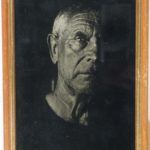
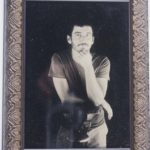
I have used this as the title for an exhibition of my own photographic work which I called “Quand J’étais Photographe – The First 50 Years, 1974 to 2024.
Each year, at the beginning of June, in Biévres just south of Paris, there is a big photographic market and festival. They have an artists section where about 100 photographers can exhibit and sell their own work. In 2024 I decided to show my work there to “test the water” to see if my work and my style is still interesting and commercial.
My involvement in photography started when I was ten, I took our folding Kodak camera to photograph the church at Harrow on the Hill, I remember the results were puzzling, what I saw was not what the camera recorded.
My next lesson was the same year from a book by David Douglas Duncan, he lauded the praise of Nikkor lenses – this piqued my interest in both the technical side of photography, and Japan.
My first commercial exercise was in the movie industry using Polaroids for continuity work at Pinewood studios – a long story including buying a real Vulcan bomber from the James Bond “Thunderball” movie set.
Eventually I went to college to study photography and got a piece of paper saying I knew what I was doing and I set up shop in 1974.
I got assignments to photograph drilling rigs and water and oil drilling equipment as well as fairgrounds in Sudan and some commissions to test cameras and camera equipment from manufacturers – this took me to Egypt, Sudan and the Gulf many times.
As I was living near Cambridge I also got work from the University and the Colleges taking portraits of Princes, Archbishops and other big-wigs at the honours ceremonies.
A fire in my premises in 1977 destroyed most of my work, but I still had a few negatives in my house so a little was left.
In 1994 I stopped, left everything and moved to France with a new young family and made a new life. We started an Internet company renting vacation properties and my photography was restricted to taking snaps of holiday homes and putting thousands of these properties online. We ended up with the biggest rental company online in France, but ill health put an end to that.
In 2014 I returned to studying old photographic techniques. I had experimented with some of these in the 1970s, but work took my time and I had little left to experiment. But we now had a small rental business and my health seemed good which gave me some time to restart.
I had used digital and analogue electronic recording cameras since the 1980s and the rapid growth, since 1995 of digital technology seemed to replace chemical photography, but I have never found the way computer chips ‘interpret’ what is ‘seen’, to be useful – (I have the same problem with lens technology). So going back to the origins of using a camera to make a statement seemed a good plan.
After ten years of experiments and tests, Using my old negatives and transparencies and accumulating piles of old camera junk, lighting systems from the 1950s and filling dustbins with broken glass and scrap paper, I am now sorting through a small pile of photographs I have made to prepare for the Biévres exhibition.
I will select a few I think are worth showing – it is not an important show, but the audience will be only photographers and people passionate about photography, so the feedback will be useful.
I have made 42 orotones – 6 wet plate collodion ambrotypes – 28 silver/gelatine prints, to select a few from.
The prints re mostly from standard negative film stock, but some are from calotypes and wet plate collodion negatives. Camera sizes vary from 35mm to 30 x 40 cm.
Perhaps ten or twelve should be chosen to show, it is always tempting to present everything, but this seems wrong, nobody will be interested in a confusion of images I think.
My love of photography has been with me since childhood. Eever since photographing the church at Harrow on the Hill I have wrestled with the illusions that optics deliver.e.
School was not a happy time. I was very good at mathematics and sciences but yearned to paint and draw – whenever I could I would go to the centre of London and visit the museums and galleries. I spent a lot of time in libraries. A book that had a strong influence on me when I was ten was “This is War” by David Douglas Duncan. The images have been with me ever since – I then knew I wanted to be a photographer and use Nikkor lenses.
I left school at 15 and was offered a “sandwich course” with a computer company “LEO computers” – I was a technical assistant in the new research department and I could go to college three days a week to “finish” my education – to my joy, the college was “Ealing School of Art and Design”. I did not know it but Freddy Mercury was a student there in the 60s (I later photographed Queen when they played in Brighton). The college has an important photography department. I was supposed to be studying maths and physics – I did go to a few maths lessons over the next three years but learnt modelling, sculpture, photographic techniques and photography history. I also did well with the computer company and we pioneered early integrated circuits and ground-breaking compiling languages. But the plug was pulled from the British computer industry – all the talented engineers went to Hong Kong or America – some of the scientists asked me to join them in new ventures (a few became Billionaires) but I fell in love with Film making and motorcycles.
I talked my way into the thriving Film industry based all around West London. As a film “extra” I could earn more in a day than my friends made in a week – but I could learn more as an actor, the problem was that I could not act, so I stood in for a stunt job crashing a motorcycle in the film series “The Saint” with Roger Moore – I did it well and I earnt a full Equity card as a stunt man after two more contracts.
But production and filming is what I wanted to do, so I talked my way into the lowest of the low job as a third assistant on a second unit (tea boy) filming – sometimes doing continuity shots with the big Polaroid cameras.
In 1971 the British film industry was wrapped up when the tax subsidies went. Many studios closed – I did some work in TV studios but it was not film.
I was determined to be a professional photographer, I went to college studied and got certification for technical work and some experience at the London School of Printing in film direction, editing and production. I got freelance photographic work from advertising agencies and some corporate clients. I moved to Cambridge, but was now too far from agencies to be called in so I started teaching photography to American Air Force personnel on their G.I. bill. I also got regular work from Cambridge University and the colleges.
While I was working around Cambridge, I got involved in computer sciences again. A good friend was a chap called Clive Sinclair who was designing early small computers (that did not work very well) and calculators (that did not work at all) we talked about the future for very large scale integrated circuits and I designed a concept for what I called a “chiprix” a silicon matrix for a sensor for an optical device (yes, I invented the digital camera in 1969) – Clive said there was no future in it so I started to think of ways of making lenses for cameras without using glass.
I also started working on ideas for other materials for photographic “papers”. One idea I am still trying to perfect is using magnetite in a gelatine emulsion to record the “image” with magnetic resonance so blind people can “see” an image through their fingertips. Interestingly the Nobel prize for medicine was given in 2021 which exactly fits my concept.
Good photographic commissions came in so I was too busy to follow up other ideas.
I worked as a professional photographer constantly from 1974 to 1985. My life was changing and I moved to Edinburgh and started a new chapter. In Edinburgh I was enchanted by the pioneers of photography in the 1840s and I also met some artists and scientists working on Platinum printing, I gave my only big old, 20x30cm camera to one artist (he has only just paid me the platinum prints he promised me for it).
Three years in Scotland scratching for work and then back to London. I found a lot of work from clients wanting photographic work in Africa and the Middle East – I have made many trips to Egypt, Sudan, Kuwait, Bahrain, Jordan, Oman, Saudi and the Emirates. From 1975 to 1990 I made over twenty trips often staying for months at a time and working on many projects for film companies and education and training for government contracts. I tried to set up the Sudanese Film Industry with friends there, but Samuelsson wanted a huge deposit for the equipment rental (very wisely) so it fizzled out.
In 1990 I was in Bahrain – the war (Desert Storm) was just about to start – so I returned to the UK and have not been back since.
A brand new start was needed. So with a growing family, we moved to the South of France with the plan to start a residential photographic school.
We found a tenth century ruin in a small village, Nizas, in Languedoc. I spent the next ten years doing odd jobs to earn money and working on our weird home. But my ideas for a photo school changed as the internet was starting. I made our first website in 1995 – this was simply to talk about our offering of accommodation for the photo school, but suddenly the whole of Microsoft and other Internet publishing companies wanted to come to France and stay with us for a rural vacation.
So I made more websites to offer this, and started one of the first blogs.
In those daft days I sometimes got over three million visitors a day – we were overwhelmed and I ended up with the biggest Internet rental website in France. It got even more silly, we got involved in TV programs, filming and property sales – newspapers in America wrote about us and more people came to the websites.
Then the Internet grew up and big corporations moved in. At the same time I was told by the French authorities I could not trade in vacation rentals as I did not have a licence. So it all suddenly stopped.
We now have a big house with a lot of accommodation, so we started our own Bed and Breakfast business and I made a new darkroom and started researching some of the old processes again.
So I am starting all over again – what will the next fifty years bring?